 Follow us on Facebook
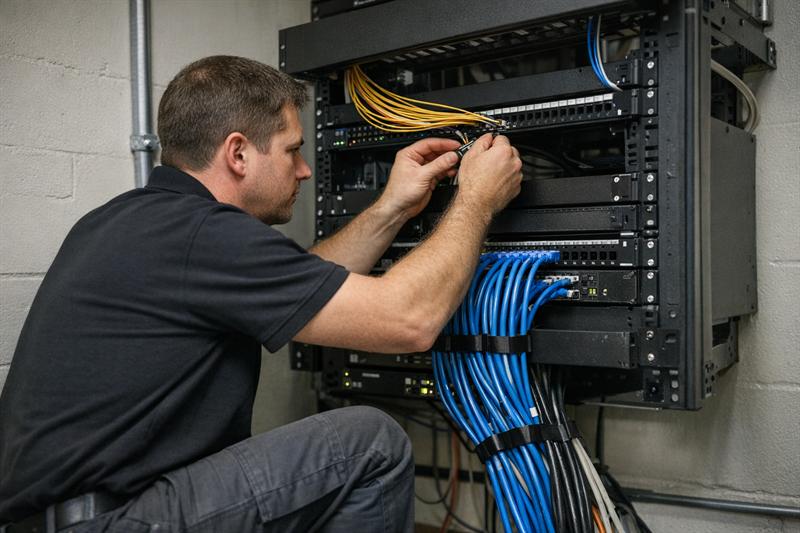
Quick Answer: Choosing between fiber and copper cabling comes down to performance needs, distance, and long-term growth. Most business networks are built with a hybrid approach, using fiber for backbone connections and copper for endpoints to reduce bottlenecks and avoid costly upgrades later.
Why This Decision Matters More Than Most Businesses Expect
Cabling decisions are difficult to reverse. Once infrastructure is installed behind walls and ceilings, changes usually require disruption, added cost, and potential downtime.
One of the most common problems is designing a network only for current needs. As usage grows, performance starts to drop, and what should have been a straightforward upgrade can turn into a much larger rebuild.
Another common mistake is choosing based only on upfront cost. That often leads to limitations within a few years as cloud platforms, video traffic, and connected devices increase.
Planning for a longer lifecycle changes that outcome. For a deeper look at how growth affects infrastructure, see how to plan a scalable network infrastructure for business growth.
What Is Fiber Cabling? (And Where It Excels)
Speed and Bandwidth Capabilities
Fiber uses light to transmit data, which allows it to carry large amounts of traffic with less congestion. In high-demand environments, that helps keep performance more consistent as usage increases.
This is where copper-heavy networks can start to struggle. As more devices and systems are added, congestion builds and performance drops across the network.
Distance and Signal Integrity
Fiber maintains signal quality over long distances. It is commonly used to connect floors, buildings, or large areas without the performance loss that affects longer copper runs.
As copper distances increase, signal degradation becomes more likely. That can lead to inconsistent speeds and reliability issues.
Ideal Business Use Cases
Fiber is typically used in:
- Large office buildings and campuses
- Data-heavy environments
- Multi-location operations
- Core network backbone connections
In these environments, consistent performance often matters more than minimizing initial cost.
What Is Copper Cabling? (And Where It Still Wins)
Cost and Accessibility
Copper cabling is widely used because it is generally more cost-effective and easier to install. For shorter distances, it provides reliable performance without added complexity.
Problems usually start when copper is used everywhere by default. What works well for short runs can become a limitation as the network grows.
Power over Ethernet (PoE) Advantages
Copper supports Power over Ethernet, allowing both power and data to run through a single cable.
This is useful for devices like:
- Wireless access points
- Security cameras
- VoIP phones
It simplifies installation and reduces the need for separate power connections.
Common Business Applications
Copper is best suited for:
- Workstations and office devices
- Short-distance connections
- Endpoint equipment
It remains essential in most networks when used in the right locations.
Fiber vs Copper: Key Differences That Impact Your Network
Speed and Performance Under Load
Fiber generally maintains performance better under heavy traffic. Copper performance depends on cable type, network design, and distance, and it can become more constrained as demand increases.
This often shows up as lag, slower system response, or inconsistent connectivity during peak usage.
Distance and Physical Limitations
Copper is better suited to shorter runs before signal quality declines. Fiber supports much longer distances without the same drop in performance.
This becomes a practical constraint in larger buildings where connections need to span multiple areas.
Interference and Reliability
Copper can be affected by electromagnetic interference, which can contribute to unstable connections in certain environments.
Fiber is not affected by electromagnetic interference, making it a strong option in spaces with heavy electrical activity. For more detail, see electromagnetic interference in data cabling.
Installation Complexity and Cost
Fiber usually requires more specialized installation and often comes with a higher upfront cost. Copper is typically simpler and faster to deploy.
This is where many decisions go wrong. Lower installation cost at the start can lead to higher upgrade costs later if the network cannot keep up.
The Real Decision: Matching Cabling to Your Business Needs
Small Office vs Large Facility
Small offices rarely need fiber to every desk. A targeted approach is usually more practical.
Larger facilities often rely on fiber to maintain consistent performance across longer distances. Without it, bottlenecks are harder to avoid.
High Data Environments vs Standard Operations
Cloud platforms, video systems, and large data transfers place continuous strain on a network.
In these environments, copper-only setups are more likely to slow down under load. That leads to recurring performance issues that are difficult to resolve without infrastructure upgrades.
Growth and Scalability Considerations
Growth should be planned into the network from the start. Retrofitting later usually requires more time, cost, and disruption.
During expansions, a common issue is that the original system was not built to scale, and it becomes the limiting factor.
Why Most Modern Networks Use Both Fiber and Copper
Backbone vs Endpoint Strategy
Most business networks use fiber for backbone connections and copper for endpoints. This structure supports both performance and practicality.
Fiber handles high-capacity links between key points, while copper connects everyday devices.
Cost-Performance Balance
This approach avoids unnecessary cost while maintaining performance where it matters most.
Installing fiber everywhere can increase cost without much added benefit. Avoiding it entirely can create performance limits. The right balance helps keep the network efficient and easier to scale.
Future Upgrade Flexibility
A fiber backbone makes future expansion easier without requiring a full replacement. Additional capacity can often be added without rebuilding the entire system.
This is how scalable infrastructure is commonly planned in business environments.
Common Mistakes Businesses Make When Choosing Cabling
- Choosing based only on upfront cost
- Installing copper where long-term performance is needed
- Using fiber in areas where it adds little value
- Ignoring interference and environmental conditions
- Failing to plan for growth
These mistakes can lead to performance issues, repeated troubleshooting, and upgrades that could have been reduced or better timed with stronger planning.
When to Upgrade from Copper to Fiber
Upgrades are usually considered when the network no longer supports day-to-day operations consistently.
- Frequent slowdowns during peak hours
- Expanding office space or adding locations
- Increased reliance on cloud or video systems
- Aging cabling that no longer performs consistently
At that stage, the network is already under strain. Delaying upgrades can lead to more frequent disruptions and higher costs over time.
If your network is showing signs like these, the issue may already be developing:
- Performance drops at predictable times
- Unstable connections in specific areas
- More devices competing for bandwidth
- Ongoing fixes that do not solve the problem
When this pattern appears, small fixes often stop working. A structured upgrade plan is usually the most effective way to improve stability.
How Professional Network Planning Changes the Outcome
Network performance is shaped by design, not just cable type.
Many businesses run into problems when cabling is installed without a full view of layout, usage, and future demand. The network works initially but becomes harder to maintain as demands increase.
Effective planning looks at building layout, interference risks, and how the network will be used over time. The difference between design decisions and long-term performance is explained in network architecture vs network design.
Ongoing maintenance also matters. As networks grow, unmanaged systems often become less stable and harder to troubleshoot.
Conclusion
The real issue is not simply choosing fiber or copper. It is building a network that cannot keep up with demand.
That usually starts with short-term decisions. The network works at first, then slows down, becomes less stable, and requires larger upgrades.
A well-planned approach helps avoid that cycle. Fiber and copper both play a role, but how they are used determines whether the network supports growth or holds it back.
Ascio Wireless, LLC works with businesses that need infrastructure built for long-term reliability. That includes planning, installation, and ongoing support based on how networks perform in real-world business environments. If performance issues are already showing or growth is expected, addressing the structure now can help prevent larger problems later.
Key Takeaways
- Fiber supports higher performance, longer distances, and easier scalability
- Copper is effective for endpoints and short connections
- Most business networks rely on a hybrid approach
- Short-term decisions can create long-term limitations
- Planning has a major impact on network performance over time
FAQ
Which is better for business, fiber or copper cabling?
Neither is universally better. Fiber is typically used for backbone connections, while copper is used for endpoints. The right mix depends on how the network is used and what performance it needs to support.
Is fiber worth the cost for small businesses?
Not always across the entire network. Many small businesses benefit from using fiber in key areas while keeping copper for devices. This improves performance without adding unnecessary cost.
How far can copper vs fiber cabling run?
Copper is better suited to shorter distances before performance starts to decline. Fiber maintains signal quality over longer runs, which is especially useful in larger buildings and multi-area layouts.
Can a business use both fiber and copper together?
Yes. Most modern business networks use both. Fiber supports core connections, while copper connects devices, creating a practical balance between performance and cost.
Does fiber improve internet speed or just network performance?
Fiber can improve internal network performance by allowing more data to move efficiently across the network. Internet speed also depends on the service plan, provider, and connection type coming into the building.
When should a company upgrade to fiber optic cabling?
It is usually worth considering when performance issues become consistent or the network is expanding. Common signs include slowdowns, instability, and increased demand from cloud or video systems. In those situations, fiber can be an important part of a more reliable long-term setup.