 Follow us on Facebook
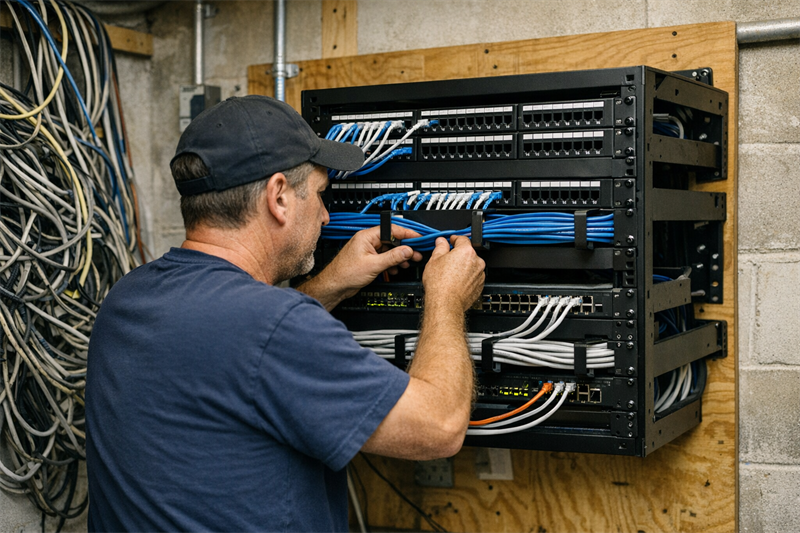
Quick Answer: A scalable network infrastructure is designed to support growth without requiring a full rebuild. Many networks are built around current demand, which can lead to performance limits, repeated upgrades, and disruption as the business expands.
Ascio Wireless, LLC works with businesses that reach this point. Growth puts pressure on systems that were not designed to expand easily. More users, more devices, and more data begin to expose the gaps. What once felt stable can start to slow down, drop connections, or require constant fixes.
What “Scalable Network Infrastructure” Actually Means in Practice
Scalable network infrastructure means a system can grow in a controlled way without being torn apart and rebuilt. It is not just about size. It is about flexibility.
One common mistake is treating scalability as simply adding extra capacity upfront. That approach can still fall short if the underlying design cannot adapt. The network may perform well early on, but growth reveals limits in how it was built.
In practical terms, a scalable network allows a business to:
- Add users without noticeable slowdowns
- Expand into new areas without major rework
- Increase bandwidth without replacing core systems
If any of those changes require major disruption, the network is likely running into design limits.
Why Scalability Fails in Real-World Networks
The gap between how a network is designed and how it is actually used is where many issues begin. On paper, everything works. In day-to-day operations, growth tends to expose weak points.
Common Design Mistakes That Limit Growth
Many networks are built around immediate needs instead of how the business is likely to operate a year or two later.
- Bandwidth is sized too tightly, leading to congestion as usage increases
- Topology decisions create bottlenecks that are difficult to expand
- Limited redundancy allows small failures to affect larger portions of the network
These issues often lead to slow performance and reactive upgrades. Over time, costs rise because fixes are layered onto a design that was never meant to scale well. For a closer look at early-stage mistakes, see preventing network design planning errors.
Hidden Constraints in Physical Infrastructure
Physical infrastructure often determines whether a network can scale smoothly.
A common issue is running out of pathway space or relying on cabling that cannot support higher speeds. Wireless networks face similar limits when device density is not planned correctly. As more devices connect, interference and congestion begin to build.
When those constraints are built into the structure, performance problems in one area can start affecting others, and upgrades become more disruptive.
Core Components of a Scalable Network Design
Scalability depends on how each layer of the network is built. One weak layer can limit everything connected to it.
Structured Cabling and Physical Layout
Cabling plays a major role in what the network can support long term.
If pathways are full or cable types are outdated, expansion becomes harder and more expensive. Planning layout, capacity, and cable selection early helps avoid those constraints. Following structured cabling design best practices can make future growth easier to support.
Wireless Network Planning and Density
Wireless networks are harder to scale when density is overlooked. Adding access points later does not always correct poor initial placement.
As device counts increase, networks that were not designed for density often become slower and less consistent. Users may experience unstable connections, and performance becomes harder to predict.
Effective planning accounts for both coverage and capacity from the beginning, rather than waiting for problems to surface.
Fiber Optics and Backbone Capacity
The backbone affects how much data the network can move overall. If this layer is constrained, the impact is felt across the network.
Fiber is commonly used because it supports higher bandwidth over longer distances. Without enough backbone capacity, networks can begin to show uneven performance, especially during heavier usage.
Hardware, Switching, and Routing Considerations
Hardware choices affect how easily the network can grow. Equipment with limited expansion options can force earlier replacement.
Timing matters here. Replacing hardware too early adds unnecessary cost, while waiting too long can create performance issues that affect daily operations.
How to Plan for Growth Without Overbuilding
Scalability is about planning the next stage of growth, not trying to build for every possible future scenario at once.
Capacity Planning vs Overprovisioning
Overbuilding is a common response to uncertainty. It can lead to unnecessary spending without addressing structural limits.
Capacity planning focuses on realistic growth. It helps keep the network flexible while avoiding wasted investment.
Designing for Phased Expansion
A phased approach is often more practical. The network is built to support the next stage, with clear paths for expansion after that.
This can include leaving room in pathways, choosing equipment that can scale, and identifying where growth is most likely to occur. The result is less disruption and more predictable upgrades.
The Role of Maintenance and Ongoing Support in Scalability
Scalability does not hold up without maintenance. This is easy to overlook until performance starts to decline.
In many networks, small issues build over time, equipment drifts out of sync, and available capacity shrinks. The network may still function, but it becomes less able to handle additional load.
Ongoing support helps keep systems stable and reduces the chance that these hidden limits will build up. More on this can be found in network maintenance planning strategies.
How to Align Network Design With Business Growth Stages
Network design should reflect how a business grows. When it does not, the network can become a constraint instead of a support system.
Early stages usually require flexibility. As the business expands, stability and performance become more important. Growth into additional spaces or locations can also create new demands across the network.
If the network does not evolve with those stages, performance issues tend to show up during periods of growth, when reliability matters most.
When to Upgrade vs When to Redesign
Upgrades can extend the life of a network, but they do not solve structural limits.
If issues are isolated, targeted upgrades may improve performance. If problems are showing up across multiple areas, the design itself is more likely the underlying issue.
This is where many businesses get stuck. Continuing to patch the system adds cost and complexity. At that point, a redesign is often the more practical path.
Key Takeaways
- Scalability needs to be planned early, not added later
- Physical infrastructure often sets practical limits for growth
- Poor design leads to repeated fixes and rising costs
- Phased expansion is usually more practical than overbuilding
- Maintenance helps preserve long-term performance
Conclusion
The main issue with scalable network infrastructure is usually not complexity. It is delayed planning. When scalability is not built in early, the network becomes harder to maintain, more expensive to upgrade, and less reliable as demand increases.
These issues often build gradually. What starts as minor slowdowns can turn into recurring performance problems and repeated upgrades. Eventually, the system may reach a point where redesign is the more effective option.
Ascio Wireless, LLC focuses on building infrastructure that supports long-term growth. That includes structured cabling, wireless planning, and ongoing support designed to reduce common failure points in growing networks.
If the network is already showing signs of strain or expansion is on the horizon, the next step is a clear review of current limitations. Addressing those limitations early can help reduce disruption and keep growth moving forward.
Frequently Asked Questions
What is scalable network infrastructure?
A scalable network infrastructure is designed to support growth without requiring a full rebuild. It uses flexible components and allows capacity to increase over time. If expansion is difficult, the design may need to be reassessed.
How do you design a scalable network?
It starts with capacity planning, flexible architecture, and infrastructure that supports expansion. Cabling, wireless layout, and hardware all play a role. If these are not planned early, gaps usually appear as demand increases.
What are the biggest challenges in network scalability?
Common challenges include physical infrastructure limits, design constraints, and lack of maintenance. Issues such as limited cabling pathways or wireless congestion are frequent causes of scaling problems.
When should a business upgrade its network infrastructure?
Upgrades are often needed when performance drops or capacity is being reached. Frequent slowdowns and connection issues can be signs that the current setup is under strain. Widespread issues usually point to deeper design limitations.
Is fiber necessary for a scalable network?
Fiber is often used for backbone connections because it supports higher bandwidth and longer distances. In many environments, networks without it may reach capacity limits sooner as demand increases.
How does wireless impact network scalability?
Wireless performance depends on planning for both coverage and device density. Poor design can lead to congestion and inconsistent connections. As more devices connect, those issues tend to become more noticeable.