 Follow us on Facebook
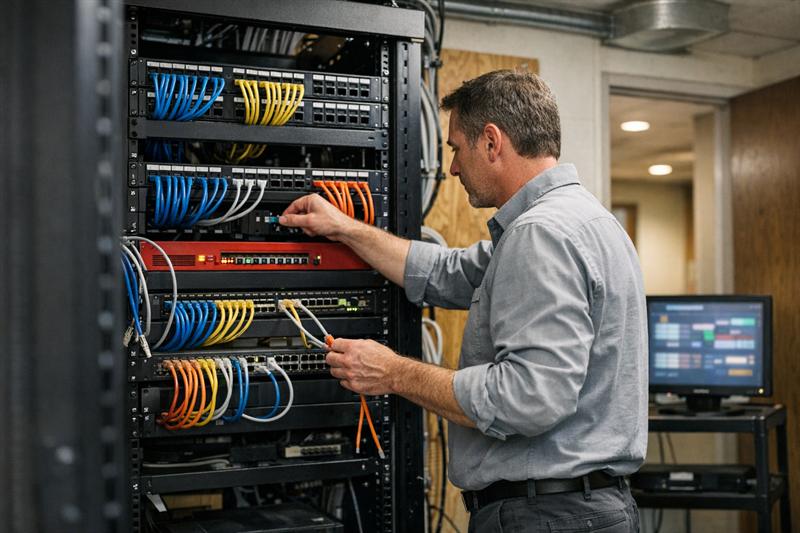
Quick Answer: Network segmentation helps businesses improve security, performance, and manageability by dividing a network into controlled sections. Without segmentation, congestion, access issues, and security problems can spread more easily across the environment, making disruptions harder to contain and resolve.
Introduction
Most business networks do not fail all at once. They become harder to manage over time. More devices are added, new systems come online, and what started as a simple setup turns into a flat, crowded network.
That is where problems start. When everything is connected, one issue can affect multiple systems. Performance drops, troubleshooting takes longer, and security gaps become harder to isolate. Network segmentation adds structure so those issues are less likely to spread across the entire environment.
What Network Segmentation Means in a Business Environment
Simple Explanation (Non-Technical)
Network segmentation divides a network into smaller sections so traffic, access, and problems stay more contained. Instead of one open environment, the network is organized into controlled zones.
A simple way to think about it is an open warehouse versus separate rooms. In an open space, everything interacts whether it needs to or not. With defined sections, access is controlled and issues are limited to specific areas.
Common Segmentation Methods (VLANs, Subnets, Firewalls)
- VLANs: Separate devices logically within the same switching environment
- Subnets: Organize devices by IP structure to control communication paths
- Firewalls: Control and restrict traffic between segments
- Internal segmentation firewalls: Add more control within the network, not just at the perimeter
These methods are often combined. The right approach depends on how the network is built, how systems need to communicate, and how the environment is expected to grow.
Why Businesses Are Moving Toward Segmented Networks
Security: Limiting Lateral Movement
In a flat network, a compromised device may be able to reach multiple systems. This lateral movement is one way a small issue can become a much larger incident.
Segmentation helps limit that spread. If one segment is affected, the impact is more likely to stay contained instead of reaching the entire network. This becomes especially important in environments that expanded over time without a clear internal structure.
Performance: Reducing Congestion and Broadcast Traffic
Flat networks allow unnecessary traffic to circulate across too many devices. This creates congestion and can slow down critical systems.
Segmentation keeps traffic more localized. Devices communicate where needed instead of across the entire network, which improves stability and consistency. In many cases, businesses increase bandwidth to fix slow performance, only to find the same issues return because the network structure never changed.
For a closer look at how traffic affects performance, see how network traffic affects overall performance.
Operational Efficiency: Easier Troubleshooting and Control
When everything is connected, troubleshooting becomes broad and time-consuming. There is no clear boundary for where a problem starts or stops.
Segmentation narrows the scope. Issues stay within a defined segment, which makes root causes easier to identify and resolve. In many environments, the problem is not simply complexity. It is a lack of structure.
Real-World Examples of Network Segmentation
Office Networks (Departments, Guest WiFi)
Departments such as finance, HR, and general users can be separated to better control access. Guest WiFi is isolated so external users cannot reach internal systems. This reduces exposure and keeps internal traffic more focused.
Warehouses and Industrial Environments
Operational systems, IoT devices, and administrative networks can be separated to reduce interference. Without that separation, high device volume or unmanaged traffic from connected equipment can create instability for more critical systems.
Multi-Site or Hybrid Work Environments
Segmentation helps keep traffic organized across locations and remote connections. Without it, traffic from different users and sites can blend together, leading to inconsistent performance and access-control challenges.
This becomes more important as businesses expand. Planning for it early supports long-term stability, as outlined in scalable network infrastructure planning.
When a Business Should Consider Network Segmentation
Warning Signs in Existing Networks
- Frequent slowdowns affecting multiple systems
- Security concerns that are difficult to isolate
- Troubleshooting that takes longer each time
- Too many devices operating on a single network
These signs usually indicate the network has outgrown its original structure.
Growth Triggers (New Devices, Locations, Users)
Growth increases demand on the network. New users, locations, and connected devices add complexity faster than many networks were originally designed to handle.
That is where problems build. Each addition may work on its own, but over time the network becomes harder to control and less predictable.
If your network is showing these signs, segmentation may be the next step:
- Performance issues affecting multiple teams at once
- New systems causing unexpected slowdowns
- Security concerns that cannot be isolated easily
- Repeated troubleshooting with no clear resolution
These patterns often point to structural limits. Addressing segmentation can help stabilize the network and make future growth easier to support.
How Network Segmentation Is Implemented
Logical vs Physical Segmentation
Logical segmentation uses configurations such as VLANs to separate traffic. Physical segmentation uses dedicated hardware, cabling, or fully separate network paths.
Most environments use a mix of both. Logical segmentation provides flexibility, but it still depends on the physical network underneath.
Role of Cabling, Switching, and Wireless Design
Segmentation only works as well as the infrastructure supporting it. Switch capacity, cabling layout, and wireless design all affect how segments perform.
This point is easy to overlook. Businesses may try to segment through configuration alone, then run into limits because the network was never built to support that design cleanly. In some cases, the issue comes back to cabling or hardware constraints, similar to the considerations involved in choosing the right cabling infrastructure.
Common Mistakes During Implementation
- Creating too many segments without a clear purpose
- Overlooking hardware limitations
- Misconfiguring access controls between segments
- Treating segmentation as a one-time setup instead of an ongoing design decision
This is where implementations can break down. The structure exists, but it does not match how the network is actually used.
How Segmentation Supports Long-Term Network Reliability
Networks without structure tend to become less consistent over time. Performance varies, and issues are harder to isolate.
Segmentation creates a more controlled environment. It limits the impact of failures, improves predictability, and supports growth without constant rework. These principles align with broader planning concepts explained in network architecture vs design.
A common mistake is delaying segmentation until problems become disruptive. At that point, changes are usually larger and more complex than they would have been earlier.
Key Takeaways
- Flat networks often create performance and security challenges as they grow
- Segmentation controls how traffic moves and helps limit how issues spread
- Many performance problems come from structure, not just bandwidth limits
- Infrastructure design directly affects segmentation success
- Delaying segmentation usually increases complexity over time
Conclusion
Network issues rarely come from a single point of failure. They build as systems expand without structure, leading to slower performance, broader exposure, and longer recovery times.
Segmentation addresses that problem at its source. It organizes how traffic flows, helps limit how issues spread, and creates a network that is easier to manage as it grows.
Ascio Wireless, LLC works with businesses that need stronger network structure, better performance, and more control as their environments expand. The focus is on building reliable network foundations supported by proper cabling, wireless design, and ongoing support. If the network is becoming harder to manage or performance is declining, a review of the current structure can help identify where segmentation would have the greatest impact.
Frequently Asked Questions
What is network segmentation in simple terms?
Network segmentation divides a network into smaller sections to control traffic and access. This is commonly done using VLANs, subnets, or firewalls to separate systems based on their role or level of access.
Does network segmentation improve performance?
It often does. Segmentation reduces unnecessary traffic and keeps communication more focused, which can lead to more consistent performance and fewer slowdowns across the network.
Is VLAN the same as network segmentation?
No. A VLAN is one method used to segment a network. Segmentation can also include subnets, firewalls, and physical separation. The right approach depends on the network design and operational needs.
When should a business implement network segmentation?
Segmentation is worth considering when a network becomes slow, difficult to manage, or is growing quickly. Adding users, devices, or locations without restructuring often leads to these issues.
Is network segmentation expensive to implement?
Costs depend on the current infrastructure and the goals of the project. Some networks can be improved through configuration changes, while others may require hardware upgrades or redesign.
Can small businesses benefit from network segmentation?
Yes. Even smaller networks can benefit from separating critical systems, staff devices, and guest access. That can improve both performance and control while making future growth easier to support.