 Follow us on Facebook
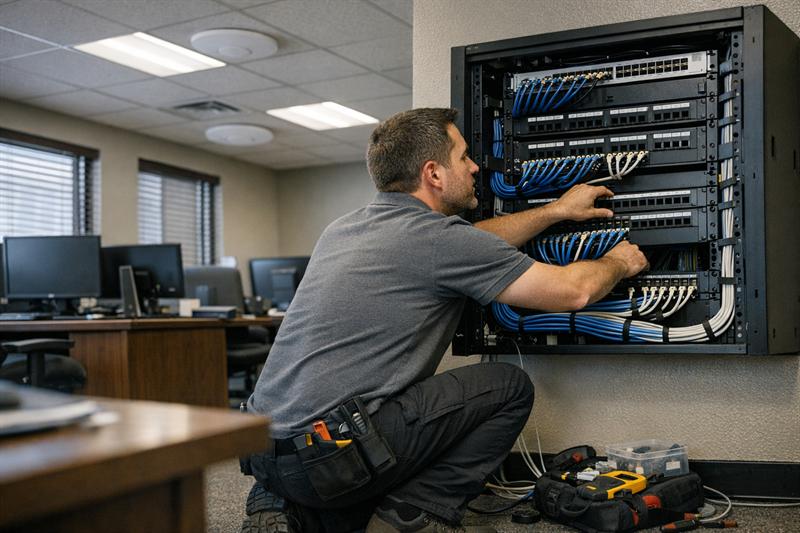
Quick Answer: Most business networks run into scaling problems because they are built around current needs instead of likely future demand. That often leads to repeated upgrades, performance issues, and rising costs. Future-proof network infrastructure means designing for scalability, flexibility, and long-term reliability from the start.
Why Most Business Networks Fail to Scale
This pattern shows up in many growing businesses. The network works at first, then performance drops, coverage becomes inconsistent, and upgrades start happening more often than expected.
A common issue is building around immediate needs. The focus is on getting systems running quickly, not on how they will handle growth. That approach can lead to bottlenecks, patchwork fixes, and avoidable rework.
Short-Term Decisions That Create Long-Term Limitations
This is where many problems begin. Lower-grade cabling, minimal wireless planning, and skipped site evaluation can leave a network with little room to expand cleanly.
It is easy to underestimate how quickly device counts grow. What starts as a manageable load can turn into congestion, dropped connections, and inconsistent performance.
The Hidden Cost of Reactive Upgrades
Reactive upgrades interrupt operations and increase labor costs. They also tend to involve revisiting work that could have been planned differently from the start.
This gets worse as changes stack up. Instead of one structured improvement, the network becomes a mix of temporary fixes that is harder to manage and more expensive to maintain.
For a deeper look at how aging systems contribute to these issues, see how to audit and upgrade legacy network infrastructure.
What “Future-Proof” Really Means in Network Infrastructure
Future-proofing is not about predicting every new technology. It is about building a network that can accommodate change without needing a major rebuild.
A future-ready network supports growth, adapts to new demands, and avoids limitations that force costly redesigns.
Scalability vs Overbuilding
The goal is not to overspend. It is to make informed decisions that allow expansion without unnecessary disruption.
This means selecting infrastructure that can handle increased demand without going far beyond what is realistic for the business.
Designing for Flexibility, Not Perfection
Environments change. Layouts shift, teams grow, and technology evolves.
Flexible infrastructure makes those adjustments easier without major reconstruction. That is what separates networks that hold up over time from those that need constant rework.
Core Components of a Future-Proof Network
A future-proof network is built in layers. Each layer supports the others, and weaknesses in one area can affect the whole system.
- Structured cabling that supports long-term performance
- Fiber and copper planned around bandwidth growth
- Wireless designed for device density, not just coverage
- Hardware and architecture selected for scalability and redundancy
Structured Cabling as the Foundation
Cabling is often overlooked, but it has a major effect on how far a network can scale. Businesses sometimes try to improve performance at the hardware level while leaving the underlying infrastructure unchanged.
If the cabling cannot support higher speeds, switching or access point upgrades alone will not solve the problem. The bottleneck remains in place.
More detail on this can be found in structured cabling design best practices for commercial buildings.
Fiber vs Copper: Planning for Bandwidth Growth
Bandwidth demand tends to increase over time. Cloud platforms, video, and connected devices all add pressure to the network.
Fiber is often the better fit when long-term capacity and speed are priorities. Copper still has an important role, but relying on it alone can create limitations as demand grows.
For a clearer comparison, see fiber vs copper cabling for business.
Wireless Network Design and Density Planning
Wireless issues are rarely just about signal strength. A common mistake is designing for coverage instead of capacity.
This can leave a network looking adequate on paper but struggling under real usage. As more devices connect, performance drops across the environment.
Network Hardware and Architecture Choices
Hardware decisions affect how well a network can adapt over time. Limited switching capacity, lack of redundancy, or poor segmentation can create bottlenecks that are harder to correct later.
Those early decisions shape long-term performance and flexibility.
The Role of Wireless Site Surveys in Long-Term Planning
Wireless networks should not be based on assumptions. Building materials, interference, and layout all affect performance in ways that are not obvious during planning.
Why Predictive Surveys Matter Before Deployment
Predictive surveys help estimate how a network is likely to perform before installation. This supports better access point placement and more accurate capacity planning.
Skipping this step often leads to poor placement and uneven performance.
How Real-World Validation Prevents Future Issues
Even strong designs need validation after deployment. Real-world conditions often differ from initial plans.
A network that looks solid during planning can still reveal gaps once it is live. Without validation, those issues may go unnoticed until they begin affecting operations.
Planning for Growth, Not Just Current Demand
Network demand does not stay static. Device counts increase, applications require more bandwidth, and usage patterns shift.
Device Growth and Bandwidth Trends
Offices, warehouses, and multi-site environments often see steady increases in connected devices.
Without capacity planning, that growth can lead to congestion and slowdowns. For more detail, see network capacity planning and how to avoid bottlenecks.
Supporting New Technologies and Applications
Cloud systems, VoIP, and IoT continue to increase network demand.
If infrastructure is not designed with that in mind, performance issues can become recurring rather than occasional.
If your network is already showing these signs, it may be time for a structured upgrade plan:
- Frequent slowdowns during peak usage
- WiFi dead zones or inconsistent coverage
- New devices causing noticeable performance drops
- Repeated upgrades that do not resolve the issue
These signs usually point to a network that was not built to scale efficiently.
Maintenance and Adaptability: The Overlooked Factor
Networks do not stay stable on their own. Performance shifts as usage changes and systems evolve.
Why Ongoing Network Support Matters
Ongoing support helps identify issues early and maintain performance. Without it, small problems are more likely to turn into larger disruptions.
That often results in reactive fixes instead of controlled improvements.
Designing Networks That Can Evolve
Adaptable networks allow upgrades without major disruption. This includes modular design and infrastructure that supports incremental changes.
With the right structure in place, changes are easier to manage and less disruptive to operations.
Common Mistakes That Undermine Future-Proofing
- Designing only for current headcount
- Using cabling that limits future performance
- Skipping wireless surveys
- Relying too heavily on wireless without a strong wired backbone
- Ignoring redundancy and failover planning
These mistakes can lead to repeated upgrades, higher costs, and unreliable performance.
How to Build a Long-Term Network Strategy
A structured approach helps prevent the cycle of constant fixes.
- Assess current infrastructure and identify limitations
- Define realistic growth expectations
- Align cabling, wireless, and hardware decisions
- Plan for maintenance and lifecycle management
- Work with experienced infrastructure specialists
For a broader framework, see how to plan a scalable network infrastructure for business growth.
Conclusion
The core issue is not technology alone. It is planning. Networks built only for current demand tend to struggle as requirements grow, leading to repeated costs, downtime, and operational disruption.
When infrastructure is not designed to scale, the effects do not stay isolated. They can impact performance, reliability, and day-to-day work.
Ascio Wireless, LLC approaches network infrastructure with long-term performance in mind. Structured cabling, wireless planning, and ongoing support should work together from the start so the network can grow without constant rework.
If your network is already showing signs of strain or you are planning for growth, the next step is a clear assessment and a structured plan. Addressing limitations early is usually less disruptive than reacting after problems spread.
Key Takeaways
- Most networks struggle because they are built for current needs, not future growth
- Early infrastructure decisions have a major effect on long-term performance and cost
- Cabling, wireless, and hardware should be aligned to scale effectively
- Wireless surveys and validation help prevent performance issues
- Ongoing maintenance supports long-term reliability
FAQ
What does it mean to future-proof network infrastructure?
It means designing a network that can scale and adapt without major rebuilds. This includes using infrastructure that supports higher capacity and flexible upgrades. If the current network cannot handle growth, it may need a more structured design.
How often should network infrastructure be upgraded?
Infrastructure should be reviewed regularly, but not replaced unless it is creating limitations. Well-designed systems can support multiple hardware refresh cycles. If issues keep returning, the underlying design may need attention.
Is fiber necessary for future-proofing a network?
Fiber is often the most practical choice for long-term scalability, especially where higher bandwidth or longer runs are involved. In many environments with growing demand, it becomes an important part of the infrastructure.
How do wireless site surveys improve long-term performance?
They help ensure the network is designed around real conditions instead of assumptions. Surveys can identify interference, coverage gaps, and placement issues before they become ongoing problems.
What is the biggest mistake businesses make with network infrastructure?
One of the most common mistakes is designing only for current needs. That approach often leads to capacity limits and repeated upgrades. Planning for growth early helps reduce those issues.
Can small businesses benefit from future-proof network design?
Yes. Smaller networks still grow in complexity over time. Starting with scalable infrastructure can reduce costly changes later and help keep operations stable as demand increases.