 Follow us on Facebook

Why Network Assessment Proposals Are Harder to Compare Than They Look
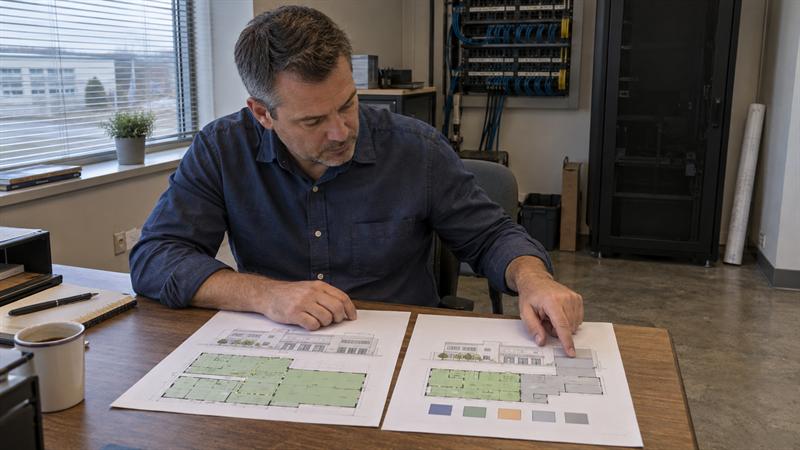
Most proposal confusion starts with labeling. Two vendors can both offer a “network assessment” and still be proposing very different work. One may be planning onsite validation, infrastructure review, and usable documentation. Another may be offering a limited remote review with a short findings summary.
That makes quick comparisons risky. The pricing may look close enough, the service names sound similar, and the scope details stay vague. In that situation, the decision often shifts toward cost instead of usefulness.
A common issue is that the lower-priced proposal leaves out the exact layer where the problem may be developing. That could be wireless validation, cabling review, physical access constraints, or documentation detailed enough to support follow-up work. When that gets missed, the assessment may not answer the business question it was approved to solve.
If you need a baseline definition before comparing proposals, what a network assessment is and when your business needs one is a useful starting point. This article picks up at the next step: deciding whether the proposal in front of you is actually complete.
What a Credible Network Assessment Proposal Should Clearly Define
A credible proposal should define boundaries, methods, outputs, and assumptions in plain language. If those pieces are missing, the scope is usually too weak even if the proposal sounds polished.
For a deeper look at the technical baseline, see what a business network assessment should include: scope, testing, and deliverables. When comparing vendors, the main question is whether the proposal makes those elements explicit.
Sites, Spaces, and Physical Boundaries
The proposal should state exactly which locations, floors, rooms, buildings, or operational areas are included. If it does not define physical boundaries, it is not defining scope clearly.
This matters most in environments where performance changes by location. Warehouses, older buildings, multi-floor offices, and mixed-use spaces often behave differently from one area to the next. Problems start when a proposal assumes the entire site can be represented by a limited walkthrough.
If the issue involves user complaints in specific spaces, the proposal should identify those spaces directly. Otherwise, the final report may stay too general to explain what is happening on the ground.
Systems and Infrastructure Included in the Review
A strong proposal should say which systems are in scope. That may include switches, access points, firewalls, internet edge devices, controllers, structured cabling, fiber, or other infrastructure tied to the issue being investigated.
A common problem is broad use of the word “network” with no clarification. That can mean part of the environment is being assumed rather than reviewed. If cabling, uplinks, or wireless infrastructure are part of the issue, they should be named directly.
This is especially important when the business is dealing with recurring instability or intermittent performance. Those problems often cross layers. If the proposal reviews only logical configuration and ignores physical infrastructure, the conclusions may come back incomplete.
Testing Methods and Validation Approach
The proposal should explain whether the vendor is observing, reviewing remotely, or actually testing. Those are not the same thing, and the difference changes the value of the assessment.
For example, a remote review can identify configuration issues, missing documentation, or obvious topology problems. It does not directly validate wireless behavior in the space, interference conditions, or how infrastructure performs under real site conditions. This is where weak scope usually becomes visible, especially when proposals promise recommendations without defining how conditions will be checked.
If wireless is part of the concern, compare the assessment language with the distinctions covered in network assessment vs. wireless site survey. That comparison matters because proposal gaps often show up when wireless work is implied but not truly scoped.
Deliverables and Documentation Format
The proposal should define what you will receive when the work is done. A credible scope usually lists items such as topology diagrams, device inventories, findings summaries, prioritized risks, remediation recommendations, and supporting visuals where relevant.
Many businesses underestimate this until the project is over. A short report with general observations is not the same as documentation another team can use later. If the deliverables are vague, the assessment can end with findings that are technically accurate but hard to act on.
A common pattern is that proposals promise “a final report” without stating whether it includes diagrams, supporting evidence, or enough detail for follow-up work. That may lead to a second round of clarification before upgrades, maintenance, or handoff can move forward.
Assumptions, Exclusions, and Access Requirements
Every credible proposal should state what it assumes and what it excludes. That includes site access, maintenance windows, credential availability, escorts, safety restrictions, and any systems not being reviewed.
This is where hidden risk often sits. If exclusions are buried, a business can approve the work expecting one result and receive something narrower. In that case, the vendor may still deliver exactly what was written, but the assessment still may not answer the original problem.
If you see exclusions tied to after-hours work, physical plant review, cabling, or location-specific testing, read those carefully. Those exclusions can remove the conditions most likely to explain intermittent or hard-to-reproduce issues.
If the proposal you are reviewing has any of these signs, it usually needs closer scrutiny before approval:
- No specific buildings, floors, zones, or problem areas named
- No clear distinction between remote review and onsite validation
- No defined deliverables beyond “report” or “recommendations”
- Exclusions that remove wireless, cabling, or physical infrastructure from review
When those gaps show up together, additional scope clarification is usually needed before the assessment will be useful.
7 Questions to Ask Before You Approve a Proposal
These questions turn proposal language into approval criteria. They help separate a real assessment from a light discovery exercise.
1. What business problem is this assessment meant to answer?
The proposal should be tied to a specific decision. That could be recurring wireless complaints, unexplained instability, relocation planning, upgrade preparation, capacity concerns, or missing documentation.
If the proposal stays generic, the results may stay generic too. A proposal that never defines the actual business problem often produces findings that are hard to prioritize because they were never tied to a real operational question.
2. Is the vendor measuring, observing, or inferring?
This question gets to the core of assessment quality. Measured findings come from testing or validation. Observed findings come from visible conditions or configuration review. Inferred findings come from assumptions based on incomplete inputs.
A common issue is that proposals blend these together so the work sounds broader than it is. If the business is dealing with wireless complaints, roaming issues, or inconsistent performance by location, measured findings usually matter most because they show what is actually happening in the environment.
3. Will the findings support actual remediation decisions?
The assessment should produce something a business can act on. That means findings should be organized in a way that supports prioritization, budgeting, and next-step planning.
If the output is limited to observations with no structure, the business still has to figure out what to do next on its own. That can delay upgrades and make recurring issues drag on longer than they should. This is why the assessment should connect cleanly to remediation planning, especially if the environment already includes aging infrastructure. For related context, see how to audit and upgrade legacy network infrastructure.
4. Does the proposal separate wireless, switching, cabling, and internet edge issues?
Many network problems span multiple layers. Slow performance, instability, and user complaints rarely stay contained to one category. That is why the proposal should make it clear whether those layers are being reviewed separately or blended together.
This usually goes wrong when one label is used to cover everything without showing how root cause will be isolated. If switching is reviewed but cabling is not, or wireless is mentioned without validation, the business can end up with partial conclusions and no clear path forward.
5. What happens onsite versus remotely?
The proposal should separate remote review from onsite work. That distinction affects time, cost, and the reliability of the conclusions.
Remote work is useful for documentation review, configuration analysis, and some forms of inventory validation. Onsite work becomes necessary when the issue depends on environmental conditions, physical access, wireless behavior, cabling realities, or problem areas that have to be seen and tested in context.
6. What is excluded that could materially affect the conclusion?
Exclusions are not just boilerplate. They define where the assessment stops, and that affects how dependable the conclusions will be.
If after-hours testing is excluded, intermittent usage issues may never be observed. If cabling is excluded, uplink problems and physical defects can stay hidden. If only one building is included, cross-site design inconsistencies may remain untouched. If exclusions remove the likely problem area, the proposal may be too narrow for the decision you need to make.
7. Who owns the documentation and next-step plan?
The proposal should make it clear what documentation the client receives and whether the findings are reusable for follow-up work. That matters because networks are maintained over time, not just assessed once.
In handoff situations, businesses sometimes inherit a report that confirms issues but does not contain enough structure to support remediation, vendor transition, or internal IT planning. When documentation is weak, the assessment may have to be revisited before corrective work can move efficiently.
Red Flags That Suggest a Proposal Scope Is Too Thin
Thin scope usually does not announce itself directly. It shows up in vague wording, missing testing detail, and deliverables that sound complete without being usable.
Generic language with no environment details
If the proposal never names the environment, it is probably not scoped tightly enough. A network assessment for a multi-floor office, warehouse, older building, or multi-location business should not read like a generic template.
This may result in findings that are too broad to explain site-specific issues. The more variable the environment, the more damaging that gap becomes.
Recommendations promised without defined testing
Recommendations only mean something if the proposal explains how they will be developed. If testing methods are not defined, the recommendations are likely based on partial review rather than validated conditions.
This is a common pattern in thin proposals. The language sounds decisive, but the path to the conclusion is missing. That can lead to rework because the business still needs evidence before making changes.
No sample deliverables or reporting detail
If the proposal says “final report” and stops there, treat that as a warning sign. The value of the assessment depends heavily on what the final documentation contains.
No deliverable detail usually means one of two things: the reporting is minimal, or the scope was not developed far enough to define the output. Either way, that creates uncertainty at the point where the business needs clarity.
No distinction between remote review and onsite validation
When the proposal blends all review activity together, it becomes hard to tell what will actually be validated. That usually leads to mismatched expectations about what the vendor can confirm.
This gets worse when the issue involves user experience in specific areas, physical infrastructure conditions, or intermittent behavior. Those problems usually require some level of onsite work to validate properly.
Exclusions that remove the likely problem area
If the proposal excludes wireless validation, cabling review, after-hours access, or key sites, the scope may be removing the exact condition causing the issue. That does not make the vendor wrong. It makes the proposal a poor fit for the problem.
This is where many businesses lose time. They approve an assessment expecting answers, then discover the answers were out of scope from the beginning.
A Simple Checklist for Comparing Network Assessment Proposals
When you compare proposals, focus on what will make the results usable later. A longer document is not automatically a better one.
Scope completeness
Check whether the proposal names the physical areas, the systems involved, and the business issue being investigated. Good scope is specific enough that another stakeholder could read it and understand what is included.
Testing clarity
Look for a clear explanation of what will be reviewed remotely, what will be observed onsite, and what will be tested directly. Good testing language explains how the vendor plans to validate the problem instead of describing the service broadly.
Deliverable usefulness
Check whether the deliverables will support future action. Good deliverables include documentation that can help internal IT, other vendors, or future upgrade teams understand what was found and what needs to happen next.
Exclusions and assumptions
Read exclusions as carefully as inclusions. Good proposals make assumptions visible early so the business can decide whether the scope still fits the real problem.
Readiness for next-step remediation or upgrade work
Ask whether the assessment will lead cleanly into corrective action. Good scope produces findings that can be prioritized and used to support upgrade decisions, maintenance planning, or targeted infrastructure work.
When a Wireless Survey, Cabling Review, or Full Network Assessment Should Be Separate
Some proposals use one label to cover several different services. That sounds efficient, but it often blurs the actual work being done. When that happens, the assessment loses clarity right where the business needs precision.
When a wireless issue needs validated survey work
If the problem involves coverage gaps, roaming complaints, interference, density issues, or inconsistent performance in specific areas, a wireless survey should be scoped clearly rather than implied. This is especially true when users report different experiences in meeting rooms, warehouses, or specific work zones.
Businesses often run into this when Wi-Fi is blamed generally but never validated by area. A survey helps confirm what the wireless environment is actually doing rather than relying on assumptions.
When physical cabling or infrastructure should be explicitly reviewed
If the network has persistent instability, intermittent link issues, or inherited infrastructure with incomplete records, physical cabling and pathways should be named directly in the scope. Problems in this layer tend to stay hidden when proposals focus only on active equipment.
This may get worse in older commercial buildings, renovation environments, or spaces where pathways and access have changed over time. If the physical layer is not addressed, the business can end up working around the problem instead of fixing it.
When a broader network assessment makes more sense
A broader assessment makes sense when the issue spans wireless, switching, topology, internet edge, documentation gaps, or future upgrade planning. In those cases, a narrowly scoped survey may answer only one part of the problem.
If the environment is changing, growing, or showing signs of layered performance issues, the broader view usually creates a better starting point. That is also why many businesses review when a business needs a network assessment before deciding how narrow or broad the scope should be.
Key Takeaways
- A credible network assessment proposal should clearly define physical scope, included systems, testing methods, deliverables, assumptions, and exclusions.
- Two proposals can use the same service label and still offer very different levels of validation and documentation.
- Thin scope usually shows up in vague environment language, missing testing detail, weak deliverables, and exclusions that remove the likely problem area.
- If wireless, cabling, and broader infrastructure issues are being blurred together, the proposal needs closer review before approval.
- The right proposal is the one that leads to usable findings and a clear next step, not just a completed report.
Conclusion
The real problem with a weak network assessment proposal is not just ambiguity on paper. It can lead to incomplete findings, delayed remediation, and repeated troubleshooting because the original scope never matched the actual issue.
If that is not addressed early, the business may spend more time and money clarifying the assessment after the fact or commissioning follow-up work that should have been scoped correctly from the start. This is where proposal quality directly affects long-term infrastructure decisions.
Ascio Wireless, LLC is a practical next step when the goal is to evaluate network, wireless, and infrastructure problems in a way that supports durable decisions instead of quick guesses. If your proposals are vague, the symptoms are repeating, or the likely issue crosses wireless, cabling, and broader network layers, it is time to clarify scope before approving the work.
How Ascio Wireless, LLC Approaches Scope Clarity
Ascio Wireless, LLC approaches assessments with a long-term infrastructure mindset. That means looking beyond a surface-level review and defining scope in a way that supports troubleshooting, documentation, remediation planning, and future maintenance.
In underperforming environments, the original assessment work is sometimes too narrow, too generic, or too disconnected from the physical site conditions. That is why scope clarity matters early. When businesses are dealing with recurring wireless complaints, inherited infrastructure, or projects that span cabling and network layers, tighter scoping often leads to better decisions and less rework later.
FAQ
What should be included in a network assessment proposal?
A credible network assessment proposal should define the physical areas being reviewed, the systems included, the testing methods, the deliverables, and any assumptions or exclusions. If those elements are missing, the scope is incomplete even if the proposal sounds detailed.
For example, a proposal that mentions wireless performance should say whether that includes onsite validation, interference review, or location-based testing. Without that level of detail, the proposal is describing a topic, not a method. That distinction matters because the method determines whether the findings will be useful later.
How can you tell if a network assessment scope is too vague?
A scope is too vague when it uses broad language without defining boundaries, methods, or outputs. Phrases like “review network environment” or “provide recommendations” sound complete, but they do not tell you what will actually be examined.
A common example is when the proposal refers to the “network” without clarifying whether that includes cabling, wireless validation, switching, or internet edge review. When those details are missing, the final report may come back with observations that are too broad to support a real decision.
What is the difference between a network assessment and a wireless site survey?
A network assessment is broader and looks across multiple parts of the environment. A wireless site survey is narrower and focuses specifically on wireless behavior such as coverage, interference, density, and roaming performance.
This difference matters when the complaint is location-specific. If users are having issues in certain rooms, aisles, or floors, a broader assessment may identify general design concerns, but a survey is what validates how the wireless environment behaves in those exact spaces.
Should a network assessment proposal include onsite testing?
It should include onsite testing when the issue depends on environmental conditions, physical infrastructure, or space-specific behavior. If the problem is tied to wireless coverage, interference, cabling conditions, or user experience in specific locations, remote review alone is usually not enough.
That does not mean every proposal needs fieldwork. It means the proposal should clearly separate remote analysis from onsite validation so you know what is being confirmed and what is only being inferred.
What deliverables should a business expect from a network assessment?
A business should expect documentation that explains what was reviewed, what was found, and what those findings mean for next steps. Depending on scope, that can include inventories, diagrams, findings summaries, prioritized risks, remediation recommendations, and supporting visuals.
The useful distinction is between a summary and a reusable deliverable. A short report can confirm that issues exist, but it may not support handoff, follow-up work, or upgrade planning. Stronger deliverables help the next team move forward without recreating the assessment from scratch.
How do you compare two network assessment proposals with different pricing?
Compare the defined scope before you compare the price. Check whether both proposals cover the same areas, systems, testing methods, and deliverables. If one includes onsite validation or remediation-ready documentation and the other does not, they are not offering the same service.
A lower price often reflects a narrower scope, not a better value. If the cheaper proposal excludes the likely problem area, the business may end up paying for clarification or follow-up work later. The better proposal is the one that produces usable findings the first time.