 Follow us on Facebook
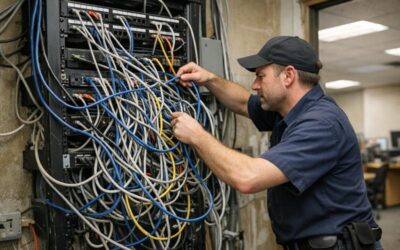
Network Architecture vs Network Design: What Businesses Need to Know
Network architecture and network design are often treated as the same thing. They are not. Architecture defines how the network is structured to support performance and growth. Design determines how that structure is built and implemented.
When architecture is skipped, design decisions become reactive. This is where networks start to develop scaling limits, inconsistent performance, and ongoing troubleshooting issues. We see this in wireless coverage gaps, poor cabling layouts, and systems that cannot expand without rework.
Strong networks require both. Architecture sets the framework for traffic flow, redundancy, and system integration. Design executes with proper equipment placement, cabling, and configuration. When these are aligned, networks are easier to maintain and scale over time.
Read the full article to understand where most networks start to break down and how to correct it.

Enterprise WiFi Design: How to Build Reliable Wireless Coverage at Scale
Enterprise WiFi Design: Coverage alone is not enough. Many networks show strong signal but still struggle under real usage. The issue is usually capacity, not coverage, or a disconnect between the wireless layer and the supporting infrastructure.
Adding access points without a plan often increases interference and instability. Channel overlap, poor placement, and uncoordinated expansion create networks that stay connected but perform inconsistently. Effective design starts with understanding device density, usage patterns, and RF behavior in the actual environment.
Wireless performance also depends on the wired foundation. Cabling, switching, and power delivery must support the demand placed on the network. Site surveys and heatmaps provide the data needed to guide placement, reduce interference, and validate performance before issues grow.
Ongoing monitoring and support keep the network aligned with changing usage over time. Read more to understand how structured WiFi design supports long-term performance.
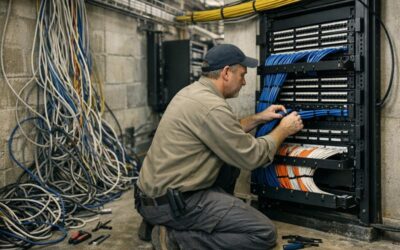
How to Design a Network for Multi-Tenant Commercial Buildings
Multi-tenant network design starts with long-term structure, not short-term tenant needs. Networks that are built only for current occupancy often run into capacity limits, security gaps, and costly redesigns as buildings evolve.
Segmentation and physical infrastructure are key. VLANs and proper traffic isolation allow tenants to operate independently on shared systems. Structured cabling, pathway planning, and a fiber backbone determine how easily the network can scale and adapt. When these are overlooked, adding tenants or resolving issues becomes more complex.
Wireless and bandwidth management also need coordination. Unplanned access points, poor QoS settings, and lack of redundancy can lead to interference, uneven performance, and outages that affect multiple tenants.
Read more to understand how to design a network that supports long-term building performance.

What Is a Network Assessment and When Does Your Business Need One
Network assessments identify where business networks begin to break down under real-world use. Most issues do not start as failures. They show up as slow performance, unstable Wi-Fi, or recurring disruptions as demand increases.
A proper assessment evaluates performance, wireless coverage, cabling infrastructure, and capacity. This includes identifying bottlenecks, signal gaps, interference, and physical layer issues that are often missed during basic troubleshooting. Many recurring problems trace back to these underlying limitations.
Common signs include inconsistent connectivity, performance drops during peak hours, and repeated fixes that do not last. As networks grow, these small issues can expand into system-wide disruptions if the root cause is not addressed.
Read the full article to understand when a network assessment makes sense and what it should uncover.

Network Redundancy Explained: How Businesses Prevent Downtime
Network redundancy is not a single backup. It is a layered design that keeps systems running when failures occur. Many outages happen because networks still have hidden single points of failure or untested failover systems.
We often see gaps in three areas. First, primary and backup connections share the same physical path, so one issue takes both offline. Second, failover exists but is not configured or tested, so it does not activate during an outage. Third, networks rely on one provider or one core device, creating avoidable risk.
Effective redundancy spans connectivity, hardware, and cabling. Separate paths, multiple providers, and properly tested failover systems are what reduce downtime. Ongoing maintenance is also required to keep these systems working as designed.
Read more to understand where network redundancy fails and how to correct it.
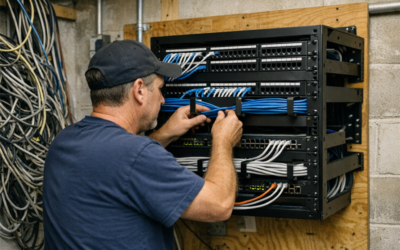
How to Plan a Scalable Network Infrastructure for Business Growth
A scalable network infrastructure is built to handle growth without constant rebuilds. Many business networks are designed around current demand, which leads to slowdowns, connection issues, and repeated upgrades as usage increases.
Scalability depends on design, not just added capacity. Bandwidth limits, poor topology, and lack of redundancy often create bottlenecks. Physical infrastructure also plays a role. Cabling pathways, wireless density, and backbone capacity can restrict how easily a network expands.
A structured approach to growth is more effective than overbuilding. Capacity planning, phased expansion, and properly selected hardware allow networks to scale without disruption. Ongoing maintenance is also critical to prevent small issues from reducing available capacity over time.
Read more to understand how to plan a network that supports long-term business growth.

Network Maintenance Planning for a Smooth Spring in New England
After a long winter in Boston, spring brings the first real chance to walk through your space and see what needs fixing. Snow is fading, air is warming, and office routines begin to shift again. It’s a good time to catch up on maintenance projects that were put off or...

Structured Cabling Design Best Practices for Commercial Buildings
Structured cabling design determines how a network performs over time. Many issues that show up later like slowdowns, outages, or difficult upgrades often trace back to design decisions, not installation quality.
Layout, capacity, and component placement all affect reliability. Undersized backbone cabling, poorly placed IDFs, or limited pathways can create bottlenecks and make changes harder to manage. Planning for scalability and redundancy early helps avoid costly rework.
Cabling also supports wireless performance and high device density. Access points, connected systems, and growing bandwidth demands all rely on a strong wired foundation. Clear documentation and standards keep systems maintainable as networks evolve.
Read the full article to understand how structured cabling design supports long-term network performance.

Exploring Network Infrastructure Solutions for Growing Boston Offices
As office spaces across Boston shift to meet growing headcounts and changing tech needs, it becomes harder to keep networks running smoothly without the right plans in place. More people means more devices, more video calls, and more areas in each building needing...
Complete Guide to Business Network Infrastructure for Growing Companies
Business network infrastructure often works until growth exposes its limits. Slow performance, dropped connections, and inconsistent systems are usually tied to how the network was built over time, not a single failure.
Network infrastructure includes routers, switches, cabling, wireless access points, and internet connectivity working as one system. When one layer falls short, the impact is seen across the entire network. A common issue is upgrading wireless without addressing older cabling, which leads to ongoing performance problems.
Scalable design focuses on long-term performance. Structured cabling, proper wireless capacity planning, traffic segmentation, and redundancy all play a role. Ongoing monitoring and maintenance help identify when systems need adjustment or replacement instead of repeated short-term fixes.
Read the full guide to understand how to plan and maintain infrastructure that supports growth.

What Network Engineers in Boston Watch Out for in Early Spring
Early spring in Boston brings more than just warmer air. For network engineers, it’s a time when winter’s leftovers can start causing real trouble. Melting snow, shifting temperatures, and rainstorms all put pressure on physical infrastructure, often in hidden places....

How Network Engineering Handles Spring Power Surges in Boston
Spring in Boston often brings a mix of warm air, cold ground, and heavy rainstorms that can play havoc with electrical systems. These changes can trigger power surges that knock out internet, phones, and internal business systems without much warning. With so many...